
Description
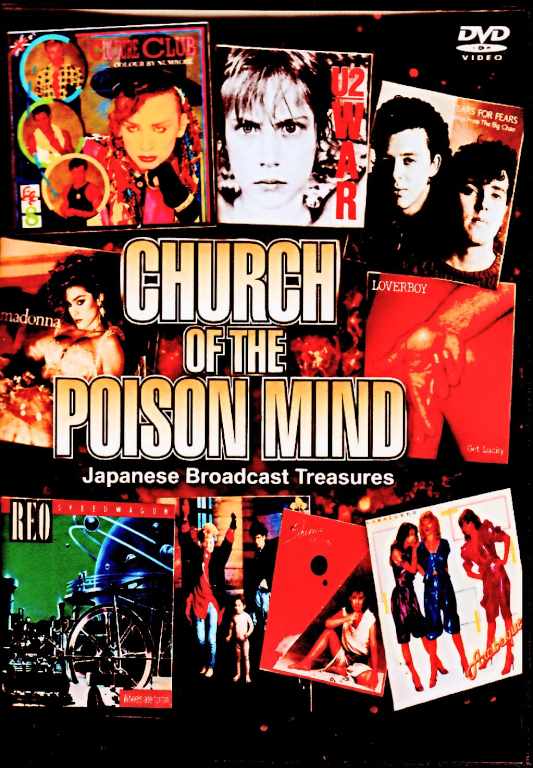
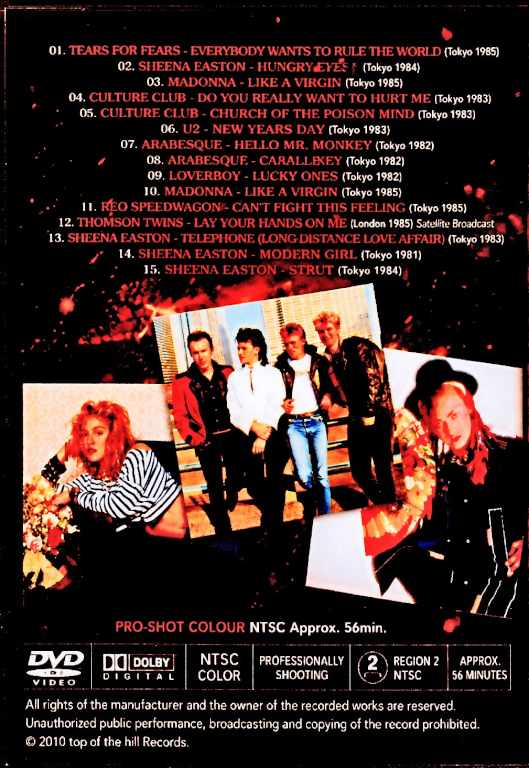
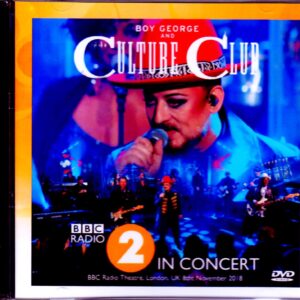
The third installment of the highly acclaimed “Nippon Hoso Studio Live Compilation” series has arrived. This volume features a generous selection of rare studio performance footage—sourced from original video masters with excellent picture quality—captured between 1982 and 1985, the golden era of Western pop music. The image quality is astonishingly good for off-air recordings from this period; free from tracking noise, the footage meets the high standards demanded by even the most discerning enthusiasts. The opening track is the nostalgic “Everybody Wants to Rule the World” by Tears for Fears—a song that instantly transports listeners back to 1985. This performance aired on May 15, 1985. Next up is Sheena Easton performing “Hungry Eyes,” taken from her third visit to Japan in 1984. We also include Madonna’s performance of “Like a Virgin” from a broadcast on January 21, 1985, during her first promotional tour in Japan. This live studio footage captures a fresh-faced Madonna singing and dancing; around the 2-minute-30-second mark, her hair accessory comes loose and falls off during an energetic move, and we see her attempting to retrieve it while continuing to dance. (While she typically performs a choreographed move to remove the accessory later in the song, here it fell off naturally, and you can see her hurriedly adjusting her actions.) It is the kind of accidental mishap that could only happen in that specific era—a rare, unscripted moment involving the iconic Madonna. Under normal circumstances, the scene would likely be reshot, but the unpredictability is part of the thrill of live broadcasting, making this a truly valuable record. Finally, the standout performance in this collection is the one that follows: Culture Club’s set from June 13, 1983. While this program primarily featured lip-synced performances, Culture Club attempted a live set, playing a medley that combined the mellow “Do You Really Want To Hurt Me” with the danceable “Church Of The Poison Mind”—an unusually long eight-minute slot for the show. The backing band’s musicianship was superb, but the true highlight was Boy George’s commanding performance; he exuded a presence reminiscent of legends like David Bowie and Marc Bolan. Anyone watching would undoubtedly have been astonished, thinking, “Is Boy George really this amazing? Is Culture Club’s music this good?” His vocals were flawless—encompassing everything from tone quality and projection to pitch control and sheer charisma—and his stage presence was masterful (on par with Bowie). It is easy to imagine the shockwave this incredible live performance sent through Japanese households in 1983, leaving a lasting impact on fans of Western music. Impressionable teenage girls who loved Western music at the time were likely completely captivated by Boy George’s enigmatic allure. This performance was so remarkable that it stands as a landmark event in the history of Western music in Japan. In stark contrast, the following act—U2, performing live on November 21, 1983—suffered a disastrous technical failure. While they were playing their classic “New Year’s Day,” The Edge’s guitar malfunctioned, producing nothing but harsh, grinding noise; the high-quality footage clearly captures the visible agitation of both Bono and bassist Adam as they struggled through the set. Adam, who noticed the trouble right from the start, kept glancing anxiously at The Edge, who was trying to manage his guitar while playing the piano. One minute and twenty seconds into the song, Bono shouted “Guitar!” (?) into the microphone and immediately pointed at The Edge, as if pleading for someone to fix the situation. Realizing the situation was beyond repair, Bono tried to compensate with improvised vocals, but the guitar—producing a sound akin to mere noise—rang out mercilessly. Nevertheless, Bono sang through to the very end like a true professional, even ad-libbing the word “Tokyo” into the lyrics. It was a performance far removed from what the band had intended, and the shock of seeing a live broadcast go so disastrously wrong must have been profound; yet, this incident remains a memorable moment in the history of Western music in Japan. It is a four-and-a-half-minute clip that vividly demonstrates the perils of live television. Next up is a refreshing and fun live performance by Arabesque—as crisp and delightful as a soft drink. In this broadcast from May 3, 1982, they performed their smash hit “Hello Mr. Monkey” accompanied by an orchestra (with studio guests dancing behind them wearing origami samurai helmets—likely because the Boys’ Festival was approaching!). This was followed by a superb live rendition of their hit at the time, “Caballero,” set against a magnificent studio backdrop. With stunning stage design, Arabesque’s captivating vocals, and precise orchestral accompaniment, this is a top-tier performance—one that any Japanese person could proudly show to music fans around the world today. Arabesque is simply the best. We then feature a rare live performance by Loverboy from their first visit to Japan in October 1982. As expected, a rock band brings a different kind of energy to the stage. Mike Reno looks sharp sporting his signature headband, though one wonders if anyone bothered to tell him the character for “Festival” (matsuri) was upside down. Finally, we return to Madonna with “Like a Virgin”; this was filmed during her first visit to Japan in January 1985, though it actually aired on February 17. Here is the legendary TV footage that reportedly left the studio staff stunned by Madonna’s haughty, un-rookie-like attitude—declaring, “I’m only performing to the track three times, so feel free to record however you like.” Shot from multiple angles, this video allows you to admire her captivating solo singing and dancing in superb picture quality. Since this is a recording, unlike “Track 3,” the dance move where she undoes her hair tie in the latter half is executed perfectly. Next up is REO Speedwagon’s massive hit “Can’t Fight This Feeling” (from the September 25th live broadcast); like the opening song “Rule the World,” it instantly transports the listener back to 1985. Although it is a mimed performance, the band’s commanding presence and charisma make the scene incredibly convincing. Then comes the nostalgic “Lay Your Hands On Me” by the Thompson Twins, broadcast via satellite from London. Seeing the Thompson Twins perform (miming) on a makeshift set atop a building is a rare treat that surely thrilled fans of Western music back then. The sound texture is unmistakably 1985—distinct from both the early and late 80s—and simply irresistible. Finally, we have three consecutive captivating studio performances by Sheena Easton in Japan. “Telefone” is from her second visit to Japan in 1983; her stylish look, featuring a short perm, is absolutely stunning (broadcast live on October 24th). Next is the smash hit “Modern Girl,” recorded for TV during her first visit to Japan in November 1981. With her lovely short-haired look—a style Japanese men adore—she sings directly into the camera, filling the screen with a truly spectacular performance (paired with tight red hot pants). Her captivating appearance, which embodied the ideal for so many, surely captivated male fans across Japan. The set concludes with the 1984 hit “Strut,” a song that was even featured in a commercial for an alcoholic beverage at the time. The production style—making full use of lasers—is quintessentially mid-80s, as are the makeup and hairstyles of the era. It is a jam-packed 56 minutes of sights and sounds—a collection of Western music broadcasts that Japan can truly be proud to share with the world. This is a high-quality compilation that will delight not only fans of 80s music and culture but also anyone who spent their youth during that decade. Whether you’re getting fired up with friends or soaking in nostalgic memories on your own—reflecting on how thirty years have already flown by—this is a highly recommended release. V.A. – CHURCH OF THE POISON MIND : JAPANESE BROADCAST TREASURES 1. Tears For Fears – Everybody Wants To Rule The World (Tokyo 1985) 2. Sheena Easton – Hungry Eyes (Tokyo 1984) 3. Madonna – Like A Virgin (Tokyo 1985) 4. Culture Club – Do You Really Want To Hurt Me (Tokyo 1983) 5. Culture Club – Church Of The Poison Mind (Tokyo 1983) 6. U2 – New Years Day (Tokyo 1983) 7. Arabesque – Hello Mr. Monkey (Tokyo 1982) 8. Arabesque – Caballero (Tokyo 1982) 9. Loverboy – Lucky Ones (Tokyo 1982) 10. Madonna – Like A Virgin (Tokyo 1985) 11. REO Speedwagon – Can’t Fight This Feeling (Tokyo 1985) 12. Thompson Twins – Lay Your Hands On Me (London 1985) Satellite Broadcast 13. Sheena Easton – Telefone (Long Distance Love Affair) (Tokyo 1983) 14. Sheena Easton – Modern Girl (Tokyo 1981) 15. Sheena Easton – Strut (Tokyo 1984) PRO-SHOT COLOR NTSC Approx. 56min.
Reviews
There are no reviews yet.