
Description
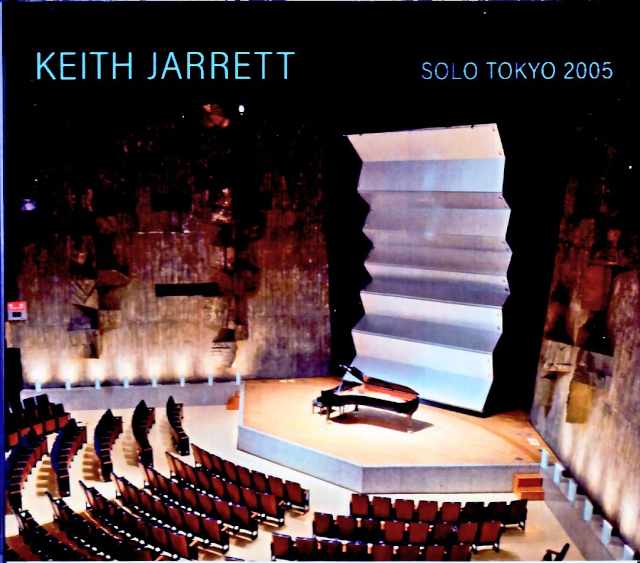
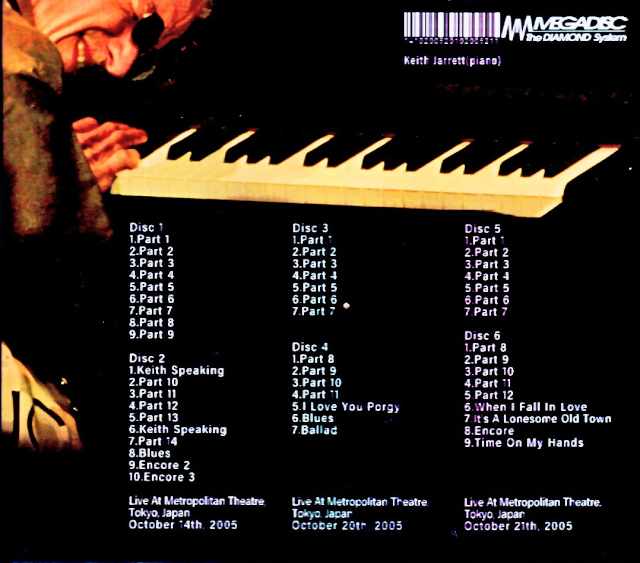
This 6-disc set is a collector’s item, featuring restored recordings of Keith Jarrett’s solo and improvisational performances at the Tokyo Metropolitan Theatre on October 14th, 20th, and 21st, 2005, from his visit to Japan in October. The recordings have been restored from old sources, with hiss noise reduced as much as possible, and track ID positions corrected. The 2005 Tokyo performances, which took place about a month after the official album “The Carnegie Hall Concert,” are highly regarded among fans. It’s a miracle that the recordings survived. The first night was October 14th, 2005, at the Tokyo Metropolitan Theatre Grand Hall. This Keith Jarrett solo concert was not only a wonderful performance, but also a special night that is still talked about among fans. During the performance, coughing and noises could be heard from the audience. Applause interrupted the lingering feeling immediately after each song ended. It is even said that cell phone ringtones could be heard. Keith’s frustration with the audience’s inability to maintain silence gradually increased. And finally, he stopped playing. “Everybody Cough, Now!” — “Everyone, cough now!” And this wasn’t the only time that night. The performance was interrupted twice, making it one of the most memorable events in Keith’s long career. However, in stark contrast to the unsettled atmosphere in the venue, Keith’s performance itself was overwhelming. Occasionally, he would stand up in a half-crouch as if his body were floating naturally, swaying from side to side as he approached the keyboard. He stomped his feet and let out a unique growl that seemed to resonate with the piano strings, squeezing sound out from his entire body. When viewed through opera glasses, he appeared to have his eyes closed behind his sunglasses, as if he were gazing only into his own inner world. Approximately two hours of improvisation. He was alone on stage. There was no sheet music. All he could rely on was his concentration in that moment. As Keith himself later said, “Very Hard,” it may have been a more grueling experience than the audience could have imagined. That is why his astonishing concentration and the perfection of his performance stand out, while the unsettled atmosphere that permeated the entire hall is a great pity. A breathtaking performance. And a lingering sense of unease. Both of these factors contribute to this Tokyo concert being an unforgettable record in Keith Jarrett’s live performance history. On October 21st, the left hand quietly and persistently repeated the low register. Above it, the notes of the right hand appeared and disappeared, reappearing and disappearing again, like bubbles floating on the surface of water. A classical and fantastical melody. And from the impressive introduction, where both hands repeatedly played the high register, the performance gradually increased in speed. There is always a tension in the moment music is born in Keith Jarrett’s solo piano performances. But on this night, there was a strange sense of liberation. The sound emanated from carefully placed fingertips. The touch was strong, yet never harsh. Rather, it was transparent and beautiful. Overtones overflowed from each note. And the reverberation spread throughout the entire hall before quietly fading away. Even the decaying sound became music. The sound was simply magnificent. There are not many performances where you can savor the lingering resonance of the piano to this extent. And before I knew it, I too had finally relaxed. Today was the first time I truly felt liberated. For the encore, he played “I Loves You Porgy.” Keith’s interpretation of this standard is simply indescribable. It sounded like a song I was hearing for the first time, yet it also sounded like a Keith original I’d known for ages. It was Gershwin, yet completely Keith Jarrett’s world. Its beauty left me speechless. Another encore. The atmosphere in the hall softened slightly, and Keith calmly moved on to the next piece. What followed was a blues. He seemed to be enjoying himself. He appeared to be enjoying the very act of playing. And then the final encore. A lovely and beautiful little piece. The music stopped. It started again. And then stopped again. This repetition created a strange tension. Until the very end, the audience tried to listen to the reverberation that lingered in the hall. No one moved. No one tried to disrupt it. The silence, too, made it a perfect performance. October 21st, no sheet music. Not classical. Not jazz. All that exists is the imagination born in that moment. When listening to Keith Jarrett’s improvisations, no matter how much the musical ideas change, the overflowing sounds never cease. And strangely, despite being completely improvised, there is a story within it, as if it had existed from the beginning, and it always reaches a single conclusion. It starts in a place no one knows, goes through landscapes no one could have predicted, and finally reaches a perfect conclusion. His strong mental fortitude. And his physical strength. When you think about it again, it is truly nothing short of astonishing. For Keith, music must be the touch itself. His bony fingers never leave the keys. Crawling, stroking, or striking. Having overcome illness, aging, and with a body thinner than before, why does he continue to fascinate people so much? Why does he become more beautiful with age? Every time you witness the moment when a new musical idea suddenly rises, you are simply moved, simply amazed, and once again reminded of the specialness of his existence. At times, the sound is reminiscent of Debussy’s “Clair de Lune.” But in the next moment, the music soars into lightning-fast passages, becoming a ballad, then a blues, and even evoking landscapes reminiscent of Indian folk music. It almost seems as if Keith is not just playing music, but purifying the world itself. And the listener, too, eventually loses their ability to think. Emotions and memories fade away. In the end, only the sound remains, becoming the sound itself. Even with standard tunes, everyone lets out a deep sigh, thinking, “Was this song really this beautiful?” “Was the melody really this wonderful?” And then there was the improvisation that day. The free improvisation, in particular, was breathtaking. It was unrestrained yet endlessly beautiful. Live at Metropolitan Theatre, Tokyo, Japan 10/14, 20, 21/2005 Disc 1 & 2 Live at Metropolitan Theatre, Tokyo, Japan Oct. 14, 2005 Disc 1 1. Part 1 2. Part 2 3. Part 3 4. Part 4 5. Part 5 6. Part 7 Part 7 8. Part 8 9. Part 9 Disc 2 1. Keith Speaking 2. Part 10 3. Part 11 4. Part 5 Part 13 6. Keith Speaking 7. Part 14 8. Blues 9. Encore 2 10. Encore 3 Disc 3 & 4 Live at Metropolitan Theatre, Tokyo, Japan Oct. 20, 2005 Disc 3 1. Part 1 2. Part 2 3. Part 3 4. Part 4 5. Part 5 6. Part 6 7. Part 7 Disc 4 1.Part 8 2.Part 9 3.Part 10 4.Part 11 5. I Love you Porgy 6. Blues 7. Ballad Disc 3 & 4 Live at Metropolitan Theatre,Tokyo,Japan Oct.21.2005 Disc 5 1.Part 1 2.Part 2 3.Part 3 4.Part 4 5.Part 5 6.Part 6 7.Part 7 Disc 6 1.Part 8 2.Part 9 3.Part 10 4.Part 11 5. Part 12 6. When I Fall in Love 7.It’s a Lonesome Old Town 8. Encore 9. Time on My Heads





Reviews
There are no reviews yet.