
Description
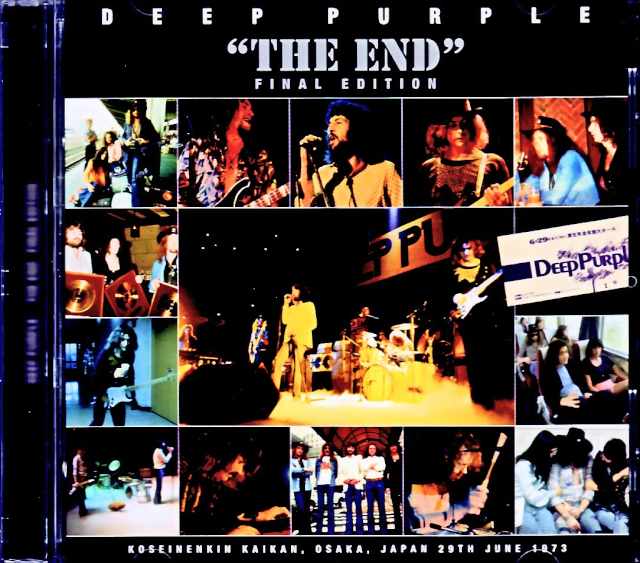
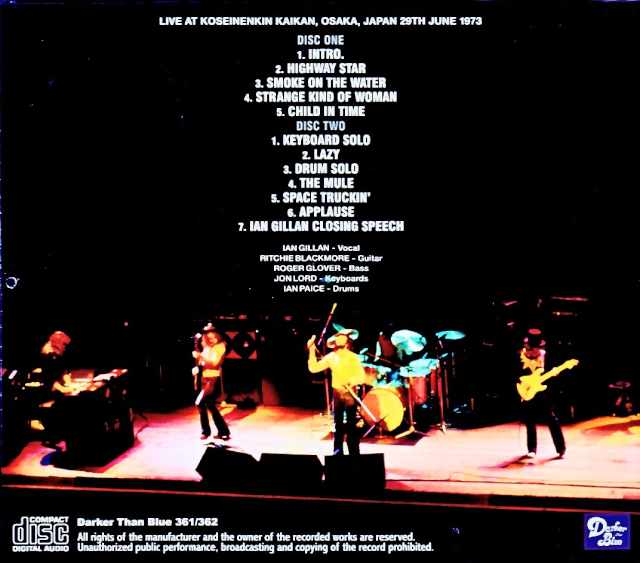
This cultural heritage album, which has conveyed the “final night of Phase II,” has been revived in its ultimate form, the best it can possibly be. A newly digitized and newly mastered version has been created, resulting in the ultimate finished product. Permanently preserved in this work is, of course, the “Osaka Kosei Nenkin Kaikan on June 29, 1973.” This is the definitive recording of the final night in Osaka, which has undergone numerous upgrades since its initial appearance in 2006. It is a superb audience recording praised as “just like a soundboard.” After being newly digitized again from the original tape, it has been thoroughly mastered until “GRAF ZEPPELIN” declared, “There is nothing more that can be done. This time, we have truly done everything we can,” making it a truly final edition. Meticulous mastering that completely reproduces the sound of the original recording Although various methods have been attempted to update it in the past, what makes this work a finished product is the stability achieved by precise, complete mono conversion. As I have mentioned from time to time, audience recordings from the 70s were generally “monaural microphone + stereo tape.” In other words, the same sound is recorded in both the left and right channels. However, differences can occur between the left and right channels due to factors such as the dubbing process and tape deterioration over time. These differences include phase shifts and the inclusion of individual noises/slight distortions in each channel. For example, in this recording, there were dropouts in one channel at the beginning of the live performance and around the two-minute mark of “Highway Star.” In this work, these minute imperfections have been thoroughly repaired. The noisy and damaged sections have been transplanted from the other channel to recreate “one perfect recording.” This sounds simple in words, but in reality, it is quite difficult. If this process is done simply, the aforementioned “differences between the left and right channels” will become very noticeable. Phase shifts can result in time gaps, hiss noise may be introduced only in the transplanted section, and the frequency balance may change. Of course, these are minor discrepancies that would normally be tolerated, but “GRAF ZEPPELIN”‘s meticulous mastering does not leave them unaddressed. Even for a fleeting part, the phase is aligned to within 1/1000th of a second, and the frequency balance and equalization are precisely matched before transplantation. This is a reconstruction of the “perfect original monaural recording” with absolutely no sense of incongruity. The “realism of the 70s” has been revived with unprecedented high definition. Of course, this is not just talk, but this precision delivers an unprecedented listening experience. The greatest appeal of this recording is the excellent recording quality at the original tape stage, and the audience is surprisingly quiet during the performance, creating an immersive feeling like an insider recording or soundboard recording. With the phase correction in this release, the positioning of the vocals has become even clearer, making “Gillan’s final battle” feel more vivid and impactful. Furthermore, the sound, which pursues a sense of naturalness, may sound similar to the previous release at first listen, but in reality, it is more powerful. From the beginning of “Highway Star,” you can feel the dense sonic force, and the impact has also increased. In the previous release, the start and stop of the tape were processed with fades, but in this release, the entire cassette master is preserved as is. The track divisions have also been revised, with “Keyboard Solo” and “The Mule” made into independent tracks. The tape quality, characteristic of vintage recordings, imbues the sound with a sepia-toned melancholy, yet each note is remarkably clear. To use a visual analogy, it’s like a “4K digital remaster” of a classic black-and-white film. Without destroying the texture of the original sound, it extracts the maximum amount of information it contained. That is the pinnacle of this work. Gillan is the star, but the one you should really listen to is Jon Lord. His final night, revived with this final sound, is truly breathtaking. On this day, perhaps due to fatigue or the mental pressure of it being his final performance, Gillan fails to hit the high notes at key points, and there are even parts where his voice doesn’t come through at all. In some scenes, his singing sounds more like dialogue than melody. However, that, too, is part of the document of June 29, 1973. His singing in “Child In Time,” imbued with a sense of tragedy, is all the more heartbreaking because of its imperfection. While Ritchie has moments of half-heartedness, like at the beginning of “Child In Time,” he still manages to unexpectedly insert brilliant playing, as expected. However, it might be John Lord who truly captivates the ears on this album. On a night when Gillan and Ritchie are inconsistent, John delivers a series of spirited performances throughout. His organ playing from 2:30 in “Highway Star” is overwhelming with its pleasantly distorted tone and incisive fingerwork, and from 7:15 in “Smoke On The Water,” he takes the lead in place of Ritchie. In “Child In Time” and “Space Truckin’,” his determination to “support the band” is evident in his intense playing, and the realism of the organ at the beginning of “Lazy” feels completely superior to the soundboard recording thanks to this mono version. In “Space Truckin’,” riffs from “Thus Spoke Zarathustra” and “Sunshine of Your Love,” as well as “Happy Birthday” (which was Paice’s birthday), and many other phrases that have been highlights of the final shows are revived in a realistic sound. It tends to be overshadowed by the fact that it was the “end of Phase II,” but in fact, it was a live performance that showcased the true essence of Jon Lord. A final speech that is newly emotional with a new sound The scream after the performance of “Space Truckin’,” and the whispered “The End” at the beginning of “Applause”—Gillan’s historic final speech is also revived in a supreme sound. After more than five minutes of thunderous requests for an encore, Gillan finally appears and speaks his final words, which he seems to be struggling to utter. The sound of this work vividly captures even the nuances contained in each and every word. “All I want to say to… all of you, is thank you very much, you’ve been great. Thank you for everything you’ve given us in Japan. And thank you, really you’re the representatives of the whole world as far as we’re concerned. Thank you and God bless you for everything you’ve ever given us. Um, this is the last night. The end. God bless ’em. Thanks a lot. Goodnight.” The audience was momentarily stunned, unable to grasp the situation. Applause and cheers erupted without understanding what was happening. Soon, voices of anger arose as they realized there would be no encore, and a female fan screamed… How many of the audience members actually understood the meaning of Gillan’s words? While this is a memorable scene I’ve listened to countless times, the freshness and naturalness of this release rekindles that emotion. “There’s nothing more we can do. We’ve done everything we could”—this is the final form of the last night of the second phase of Deep Purple, as declared by “GRAF ZEPPELIN.” Newly digitized from the original tape, phase correction and complete mono conversion have resulted in a sound that extracts the truth of the original recording to the extreme. This is the final version that deepens the legendary audience recording of the last night of the second phase, “June 29, 1973, Osaka Kosei Nenkin Kaikan.” The sound created through new digitization of the original tape, detailed correction, and complete mono conversion has reached a level of perfection that made “GRAF ZEPPELIN” say, “There’s nothing more we can do.” This final edition will make the emotion of the historic last speech all the more renewed. Newly digitized again from the tape and with the latest mastering! Phase correction and complete mono conversion. The sound dropouts at the beginning of the live performance and around the 2-minute mark of Highway have been largely eliminated. Frequency correction has been applied, but no excessive processing has been done. Koseinenkin Kaikan, Osaka, Japan 29th June 1973 TRULY PERFECT SOUND(from Original Masters) Disc 1 (41:28) 1. Intro. 2. Highway Star 3. Smoke On The Water 4. Strange Kind Of Woman 5. Child In Time Disc 2 (45:31) 1. Keyboard Solo 2. Lazy 3. Drum Solo 4. The Mule 5. Space Truckin’ 6. Applause 7. Ian Gillan Closing Speech “All I want to say to…. all of you, is thank you very much, you’ve been great. Thank you for everything you’ve given us in Japan. And thank you, really you’re the representatives of the whole world as far as we’re concerned. Thank you and God bless you for everything you’ve ever given us. Um, this is the last night. The end. God bless ’em. Thanks a lot. Goodnight. “I want to say thank you to everyone, all of you. You guys are the best. I’m grateful for everything that our Japanese fans have done for us. You really represent fans all over the world. Thank you and God bless all the memories we have with our Japanese fans. Yes, today is the last day. It’s over. Thank you so much. Goodbye.” Ian Gillan – Vocals Ritchie Blackmore – Guitar Roger Glover – Bass Jon Lord – Keyboards Ian Paice – Drums
Reviews
There are no reviews yet.